Behind the scenes of a classic historical adventure
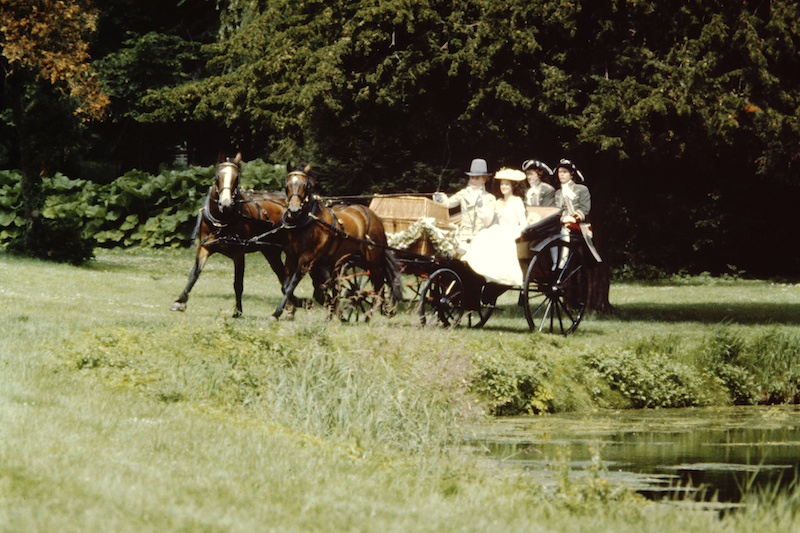
In 1982, Robert Whitaker photographed the production of The Scarlet Pimpernel, a lavish period drama set against the turmoil and bloodshed of the French Revolution. Filmed at various locations around England, the production brought together an impressive cast led by Anthony Andrews, Jane Seymour and Ian McKellen.
Based on the celebrated novels by Baroness Emmuska Orczy, the film tells the story of one of literature’s most intriguing heroes: a seemingly frivolous English aristocrat who leads a secret double life, risking everything to rescue innocent people from the guillotine.
For Robert, the production provided another opportunity to work within the world of cinema, documenting an ambitious historical drama and its cast during filming. It was a different photographic environment from the music, fashion and contemporary cultural assignments for which he was perhaps best known, but one that demonstrated the extraordinary range of his professional career.
The Scarlet Pimpernel: A hero in disguise
The story begins in France in 1792, during the Reign of Terror, one of the most violent periods of the French Revolution.
Following the execution of King Louis XVI and the growing power of revolutionary authorities, members of the French aristocracy and anyone suspected of opposing the new regime faced imprisonment and execution.
Amid the terror, an extraordinary figure begins rescuing condemned French aristocrats and helping them escape across the Channel to England.
Known only as the Scarlet Pimpernel, he repeatedly outwits the revolutionary authorities, leaving behind a small red flower as his signature.
His true identity is Sir Percy Blakeney, a wealthy English aristocrat who appears to be little more than a foppish, self-indulgent gentleman. To London’s fashionable society, Percy is a rather ridiculous character, more interested in clothes, fine food and social entertainment than anything of importance.
Behind this carefully constructed public persona, however, lies an exceptionally intelligent and courageous man who leads a secret organisation dedicated to saving lives.
The contrast between Percy’s outward appearance and his hidden identity is central to the story. His apparent foolishness is his greatest disguise, allowing him to move freely while his enemies remain unaware of his true intentions.
Anthony Andrews as Sir Percy Blakeney
Anthony Andrews took the leading role of Sir Percy Blakeney, delivering a performance that combined humour, elegance and adventure.
Andrews was already an established British television and film actor, but he had become particularly well known internationally through his portrayal of Lord Sebastian Flyte in the acclaimed television adaptation of Evelyn Waugh’s Brideshead Revisited (1981).
His performance in The Scarlet Pimpernel drew on similar qualities of aristocratic charm and sophistication, while allowing him to reveal a more adventurous and heroic side.
As Percy, Andrews had to maintain two entirely different personalities: the seemingly superficial English gentleman and the resourceful masked rescuer whose intelligence and daring continually frustrate the French authorities.
The character is both romantic hero and master of disguise, making the role particularly suited to Andrews’ combination of charm and theatricality.
Jane Seymour as Marguerite St. Just
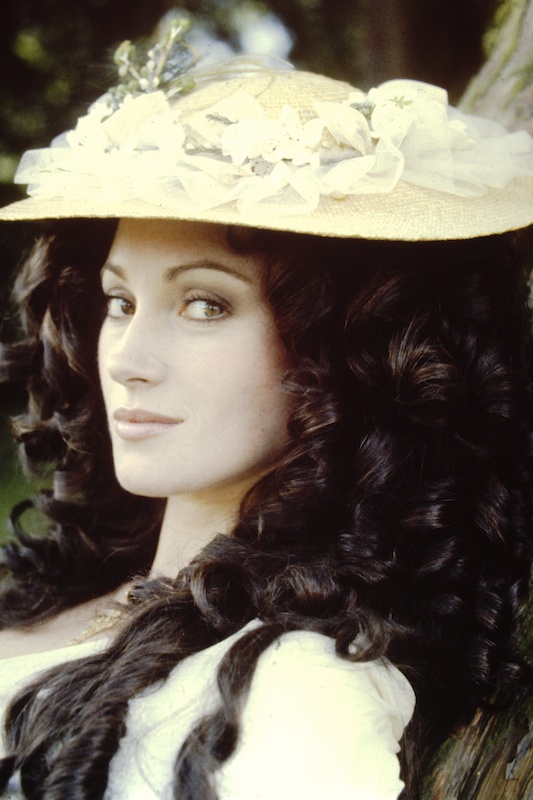
Jane Seymour played Marguerite St. Just, the beautiful and accomplished French actress who becomes Sir Percy’s wife.
Marguerite is an intelligent and independent woman whose political associations and complicated past place her in a dangerous position.
Before marrying Percy, she had been romantically involved with Paul Chauvelin, a powerful agent of the revolutionary government. Chauvelin’s continued interest in Marguerite becomes a significant threat to Percy and his secret activities.
Seymour was already an internationally recognised actress, having appeared in productions including Live and Let Die(1973) and Somewhere in Time (1980).
Her performance brought considerable emotional depth to the story. Marguerite is not simply a romantic interest but a woman caught between her past, her political convictions and her growing understanding of the man she has married.
The relationship between Percy and Marguerite provides the emotional centre of the film, with questions of trust, loyalty and deception running alongside the adventure.
Ian McKellen as Chauvelin
The antagonist, Paul Chauvelin, was played by Ian McKellen.
Chauvelin is an intelligent and determined agent of the revolutionary government, tasked with identifying and capturing the mysterious Scarlet Pimpernel.
McKellen brought considerable dramatic authority to the role. Already highly respected for his work on stage, he would go on to become one of Britain’s most distinguished actors, enjoying an extraordinary career in theatre, television and film.
His portrayal of Chauvelin provides a formidable opponent for Percy. The two men are engaged in a battle of intelligence and deception, each attempting to anticipate the other’s movements.
Chauvelin’s connection to Marguerite adds a further personal dimension to the conflict, making the pursuit of the Scarlet Pimpernel more than simply a political mission.
The contrast between Andrews’ light-hearted and seemingly carefree hero and McKellen’s calculating revolutionary adversary gives the film much of its dramatic energy.
Baroness Orczy and the origins of the Scarlet Pimpernel
The character of the Scarlet Pimpernel was created by Hungarian-born British writer Baroness Emmuska Orczy.
Born in Hungary in 1865, Orczy moved to London with her family as a young woman. She initially pursued a career in painting before turning to writing.
The Scarlet Pimpernel first appeared in a play written by Orczy and her husband, Montagu Barstow, which opened in Nottingham in 1903 before transferring to London’s West End in 1905.
The play was a considerable success and led Orczy to develop the character into a series of novels.
The first novel, The Scarlet Pimpernel, was published in 1905 and introduced readers to Sir Percy Blakeney and his secret organisation.
Orczy followed the success with numerous further adventures, establishing the Scarlet Pimpernel as one of the great romantic heroes of popular literature.
The character’s appeal lies in the combination of adventure, humour, disguise and moral courage. Percy is an apparently unlikely hero whose intelligence and bravery are concealed behind an elaborate performance of foolishness.
His famous motto, “They seek him here, they seek him there”, has become one of the most recognisable phrases associated with the character.
The 1982 film draws on Orczy’s original creation and the wider literary world she developed, although its story differs from the novels in several respects.
The French Revolution and the Reign of Terror
The historical setting is central to the film’s atmosphere.
The French Revolution began in 1789, bringing an end to the absolute monarchy and challenging the political and social structures that had governed France for centuries.
By 1792, the country was entering an increasingly turbulent period. The monarchy was abolished in September, and the following year King Louis XVI was executed.
The revolutionary government became increasingly radical, with the Committee of Public Safety and figures such as Maximilien Robespierre exercising enormous political power.
The Reign of Terror, generally dated from 1793 to 1794, saw thousands of people executed or imprisoned as suspected enemies of the Revolution.
It was against this background that Orczy imagined the exploits of an English gentleman who risked his life to rescue those condemned by the revolutionary authorities.
Although the Scarlet Pimpernel is a fictional character, the historical circumstances give the story its sense of danger and urgency.
The film combines real historical events with romantic adventure, creating a dramatic world of aristocratic estates, revolutionary intrigue, disguises and daring escapes.
Filming in England
The 1982 production was filmed at various locations around England, using the country’s historic buildings, estates and countryside to recreate the atmosphere of late eighteenth-century France and England.
Period dramas of this scale relied heavily on authentic architecture, elaborate costumes and carefully designed interiors to transport audiences into another historical period.
The production’s costumes and settings were particularly important in establishing the contrast between the fashionable society of London and the increasingly dangerous political environment of revolutionary France.
For Robert Whitaker, the production provided a fascinating photographic assignment.
His work involved photographing the production of the film, documenting another group of distinguished actors and the creative activity taking place behind the camera.
It was a different world from the contemporary music and cultural scene that had featured so prominently in his earlier career. Instead of recording the personalities of the 1960s counterculture, he was now working around actors dressed in elaborate eighteenth-century costumes, within historic English locations transformed into the world of the French Revolution.
The contrast is an interesting illustration of the breadth of Robert’s photographic work and his ability to move between very different creative environments.
Robert Whitaker and the world of cinema
Robert’s involvement with The Scarlet Pimpernel forms part of a longer relationship with the film industry.
His earlier assignments included Performance (filmed in 1968), the extraordinary collaboration between Donald Cammell and Nicolas Roeg featuring Mick Jagger, James Fox and Anita Pallenberg.
He also photographed on The Go-Between, Joseph Losey’s acclaimed adaptation of L. P. Hartley’s novel, and The Jerusalem File, filmed in Israel in 1971.
By the early 1980s, Robert had accumulated a varied body of work connected with cinema, documenting productions that ranged from experimental contemporary films to traditional historical dramas.
The Scarlet Pimpernel represents another chapter in that story.
His photographs offer the opportunity to look beyond the finished film and consider the people, locations and atmosphere of the production itself.
A lasting literary and cinematic legacy
The Scarlet Pimpernel has remained popular for more than a century because its central character is so appealing.
Sir Percy Blakeney is an unconventional hero. His greatest strength is his ability to disguise his intelligence and intentions, using society’s assumptions about him to protect those who cannot protect themselves.
The 1982 production brought Orczy’s creation to a new generation, with Anthony Andrews, Jane Seymour and Ian McKellen delivering memorable performances.
For Robert Whitaker, photographing the film provided another opportunity to document an important production and add to an increasingly diverse photographic archive.
From the revolutionary streets of fictional Paris to the historic estates of England, The Scarlet Pimpernel offered a richly visual world in which Robert could continue his work behind the scenes.
His photographs preserve a connection to the making of the film and to another generation of actors and filmmakers whose work helped bring a much-loved literary adventure to the screen.
Film details
- Title: The Scarlet Pimpernel
- Production: 1982
- Release: 1982
- Director: Clive Donner
- Screenplay: Alexander Baron
- Based on: The Scarlet Pimpernel and Eldorado by Baroness Emmuska Orczy
- Cast: Anthony Andrews, Jane Seymour, Ian McKellen, James Villiers and Eleanor David
- Setting: France and England during the French Revolution
- Filming locations: Various locations around England
- Robert Whitaker: Production photography
Photographs © Robert Whitaker. All rights reserved.The Scarlet Pimpernel (1982)
Robert Whitaker behind the scenes of a classic historical adventure
In 1982, Robert Whitaker photographed the production of The Scarlet Pimpernel, a lavish period drama set against the turmoil and bloodshed of the French Revolution. Filmed at various locations around England, the production brought together an impressive cast led by Anthony Andrews, Jane Seymour and Ian McKellen.
Based on the celebrated novels by Baroness Emmuska Orczy, the film tells the story of one of literature’s most intriguing heroes: a seemingly frivolous English aristocrat who leads a secret double life, risking everything to rescue innocent people from the guillotine.
For Robert, the production provided another opportunity to work within the world of cinema, documenting an ambitious historical drama and its cast during filming. It was a different photographic environment from the music, fashion and contemporary cultural assignments for which he was perhaps best known, but one that demonstrated the extraordinary range of his professional career.
The Scarlet Pimpernel: A hero in disguise
The story begins in France in 1792, during the Reign of Terror, one of the most violent periods of the French Revolution.
Following the execution of King Louis XVI and the growing power of revolutionary authorities, members of the French aristocracy and anyone suspected of opposing the new regime faced imprisonment and execution.
Amid the terror, an extraordinary figure begins rescuing condemned French aristocrats and helping them escape across the Channel to England.
Known only as the Scarlet Pimpernel, he repeatedly outwits the revolutionary authorities, leaving behind a small red flower as his signature.
His true identity is Sir Percy Blakeney, a wealthy English aristocrat who appears to be little more than a foppish, self-indulgent gentleman. To London’s fashionable society, Percy is a rather ridiculous character, more interested in clothes, fine food and social entertainment than anything of importance.
Behind this carefully constructed public persona, however, lies an exceptionally intelligent and courageous man who leads a secret organisation dedicated to saving lives.
The contrast between Percy’s outward appearance and his hidden identity is central to the story. His apparent foolishness is his greatest disguise, allowing him to move freely while his enemies remain unaware of his true intentions.
Anthony Andrews as Sir Percy Blakeney
Anthony Andrews took the leading role of Sir Percy Blakeney, delivering a performance that combined humour, elegance and adventure.
Andrews was already an established British television and film actor, but he had become particularly well known internationally through his portrayal of Lord Sebastian Flyte in the acclaimed television adaptation of Evelyn Waugh’s Brideshead Revisited (1981).
His performance in The Scarlet Pimpernel drew on similar qualities of aristocratic charm and sophistication, while allowing him to reveal a more adventurous and heroic side.
As Percy, Andrews had to maintain two entirely different personalities: the seemingly superficial English gentleman and the resourceful masked rescuer whose intelligence and daring continually frustrate the French authorities.
The character is both romantic hero and master of disguise, making the role particularly suited to Andrews’ combination of charm and theatricality.
Jane Seymour as Marguerite St. Just
Jane Seymour played Marguerite St. Just, the beautiful and accomplished French actress who becomes Sir Percy’s wife.
Marguerite is an intelligent and independent woman whose political associations and complicated past place her in a dangerous position.
Before marrying Percy, she had been romantically involved with Paul Chauvelin, a powerful agent of the revolutionary government. Chauvelin’s continued interest in Marguerite becomes a significant threat to Percy and his secret activities.
Seymour was already an internationally recognised actress, having appeared in productions including Live and Let Die(1973) and Somewhere in Time (1980).
Her performance brought considerable emotional depth to the story. Marguerite is not simply a romantic interest but a woman caught between her past, her political convictions and her growing understanding of the man she has married.
The relationship between Percy and Marguerite provides the emotional centre of the film, with questions of trust, loyalty and deception running alongside the adventure.
Ian McKellen as Chauvelin
The antagonist, Paul Chauvelin, was played by Ian McKellen.
Chauvelin is an intelligent and determined agent of the revolutionary government, tasked with identifying and capturing the mysterious Scarlet Pimpernel.
McKellen brought considerable dramatic authority to the role. Already highly respected for his work on stage, he would go on to become one of Britain’s most distinguished actors, enjoying an extraordinary career in theatre, television and film.
His portrayal of Chauvelin provides a formidable opponent for Percy. The two men are engaged in a battle of intelligence and deception, each attempting to anticipate the other’s movements.
Chauvelin’s connection to Marguerite adds a further personal dimension to the conflict, making the pursuit of the Scarlet Pimpernel more than simply a political mission.
The contrast between Andrews’ light-hearted and seemingly carefree hero and McKellen’s calculating revolutionary adversary gives the film much of its dramatic energy.
Baroness Orczy and the origins of the Scarlet Pimpernel
The character of the Scarlet Pimpernel was created by Hungarian-born British writer Baroness Emmuska Orczy.
Born in Hungary in 1865, Orczy moved to London with her family as a young woman. She initially pursued a career in painting before turning to writing.
The Scarlet Pimpernel first appeared in a play written by Orczy and her husband, Montagu Barstow, which opened in Nottingham in 1903 before transferring to London’s West End in 1905.
The play was a considerable success and led Orczy to develop the character into a series of novels.
The first novel, The Scarlet Pimpernel, was published in 1905 and introduced readers to Sir Percy Blakeney and his secret organisation.
Orczy followed the success with numerous further adventures, establishing the Scarlet Pimpernel as one of the great romantic heroes of popular literature.
The character’s appeal lies in the combination of adventure, humour, disguise and moral courage. Percy is an apparently unlikely hero whose intelligence and bravery are concealed behind an elaborate performance of foolishness.
His famous motto, “They seek him here, they seek him there”, has become one of the most recognisable phrases associated with the character.
The 1982 film draws on Orczy’s original creation and the wider literary world she developed, although its story differs from the novels in several respects.
The French Revolution and the Reign of Terror
The historical setting is central to the film’s atmosphere.
The French Revolution began in 1789, bringing an end to the absolute monarchy and challenging the political and social structures that had governed France for centuries.
By 1792, the country was entering an increasingly turbulent period. The monarchy was abolished in September, and the following year King Louis XVI was executed.
The revolutionary government became increasingly radical, with the Committee of Public Safety and figures such as Maximilien Robespierre exercising enormous political power.
The Reign of Terror, generally dated from 1793 to 1794, saw thousands of people executed or imprisoned as suspected enemies of the Revolution.
It was against this background that Orczy imagined the exploits of an English gentleman who risked his life to rescue those condemned by the revolutionary authorities.
Although the Scarlet Pimpernel is a fictional character, the historical circumstances give the story its sense of danger and urgency.
The film combines real historical events with romantic adventure, creating a dramatic world of aristocratic estates, revolutionary intrigue, disguises and daring escapes.
Filming in England
The 1982 production was filmed at various locations around England, using the country’s historic buildings, estates and countryside to recreate the atmosphere of late eighteenth-century France and England.
Period dramas of this scale relied heavily on authentic architecture, elaborate costumes and carefully designed interiors to transport audiences into another historical period.
The production’s costumes and settings were particularly important in establishing the contrast between the fashionable society of London and the increasingly dangerous political environment of revolutionary France.
For Robert Whitaker, the production provided a fascinating photographic assignment.
His work involved photographing the production of the film, documenting another group of distinguished actors and the creative activity taking place behind the camera.
It was a different world from the contemporary music and cultural scene that had featured so prominently in his earlier career. Instead of recording the personalities of the 1960s counterculture, he was now working around actors dressed in elaborate eighteenth-century costumes, within historic English locations transformed into the world of the French Revolution.
The contrast is an interesting illustration of the breadth of Robert’s photographic work and his ability to move between very different creative environments.
Robert Whitaker and the world of cinema
Robert’s involvement with The Scarlet Pimpernel forms part of a longer relationship with the film industry.
His earlier assignments included Performance (filmed in 1968), the extraordinary collaboration between Donald Cammell and Nicolas Roeg featuring Mick Jagger, James Fox and Anita Pallenberg.
He also photographed on The Go-Between, Joseph Losey’s acclaimed adaptation of L. P. Hartley’s novel, and The Jerusalem File, filmed in Israel in 1971.
By the early 1980s, Robert had accumulated a varied body of work connected with cinema, documenting productions that ranged from experimental contemporary films to traditional historical dramas.
The Scarlet Pimpernel represents another chapter in that story.
His photographs offer the opportunity to look beyond the finished film and consider the people, locations and atmosphere of the production itself.
A lasting literary and cinematic legacy
The Scarlet Pimpernel has remained popular for more than a century because its central character is so appealing.
Sir Percy Blakeney is an unconventional hero. His greatest strength is his ability to disguise his intelligence and intentions, using society’s assumptions about him to protect those who cannot protect themselves.
The 1982 production brought Orczy’s creation to a new generation, with Anthony Andrews, Jane Seymour and Ian McKellen delivering memorable performances.
For Robert Whitaker, photographing the film provided another opportunity to document an important production and add to an increasingly diverse photographic archive.
From the revolutionary streets of fictional Paris to the historic estates of England, The Scarlet Pimpernel offered a richly visual world in which Robert could continue his work behind the scenes.
His photographs preserve a connection to the making of the film and to another generation of actors and filmmakers whose work helped bring a much-loved literary adventure to the screen.
Film details
- Title: The Scarlet Pimpernel
- Production: 1982
- Release: 1982
- Director: Clive Donner
- Screenplay: Alexander Baron
- Based on: The Scarlet Pimpernel and Eldorado by Baroness Emmuska Orczy
- Cast: Anthony Andrews, Jane Seymour, Ian McKellen, James Villiers and Eleanor David
- Setting: France and England during the French Revolution
- Filming locations: Various locations around England
- Robert Whitaker: Production photography
Photographs © Robert Whitaker. All rights reserved.

Jane Seymour. 1982. Photo – Robert Whitaker